
Why digital marketing is no longer optional—and how it fuels growth, visibility, and long-term success
In today’s digital-first world, businesses no longer compete only on product or price—they compete on attention. With more than 7 billion internet users globally, customers spend a large part of their day online: searching, scrolling, watching, comparing, and buying. This shift has transformed how businesses attract, engage, and convert their audiences.
Digital marketing has emerged as the most powerful way for brands to connect with customers, understand their behavior, and grow without geographical limitations. Unlike traditional advertising, digital marketing is measurable, flexible, and customer-centric—making it essential for businesses of every size.
Let’s explore why digital marketing matters so much today and how its core strategies help businesses stay competitive in the digital age
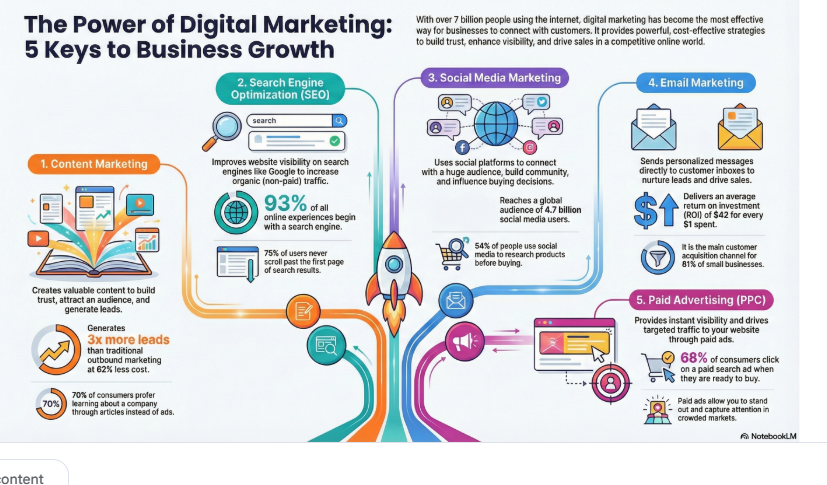
What Makes Digital Marketing So Important?
Digital marketing allows businesses to:
- Reach customers where they already spend time
- Promote products at lower costs compared to traditional media
- Measure performance in real time
- Personalize communication at scale
- Compete with larger brands without massive budgets
From startups to global brands, companies that invest in digital marketing gain a clear advantage in visibility, engagement, and customer loyalty.
1. Content Marketing: Building Trust Before the Sale
Content marketing focuses on delivering value before promotion. Instead of directly pushing products, brands educate, inform, and inspire their audience through blogs, videos, guides, podcasts, and social posts.
Why Content Marketing Matters
- People trust brands that help them solve problems
- Educational content builds long-term credibility
- Valuable content attracts organic traffic over time
Key Benefits of Content Marketing
- Authority & Trust: When brands consistently share useful insights, audiences see them as experts.
- Audience Engagement: Helpful content encourages shares, comments, and repeat visits.
- Cost Efficiency: Content continues to generate leads long after it’s published.
- Consumer Preference: Many users prefer reading blogs or watching videos instead of viewing ads.
Example:
Brands like HubSpot use in-depth blogs and free resources to educate marketers, while Red Bull creates high-energy content that perfectly matches its adventurous brand image.
2. Search Engine Optimization (SEO): Being Found at the Right Moment
SEO ensures your business appears when people actively search for information, products, or services. It focuses on improving website visibility through keyword optimization, quality content, technical performance, and backlinks.
Why SEO Is a Core Digital Marketing Pillar
- Most online journeys start with a search engine
- Users trust websites that rank higher organically
- SEO delivers consistent, long-term traffic
Why SEO Is So Powerful
- High Intent Traffic: Users searching are already interested.
- Visibility on Page One: Most clicks go to top search results.
- Brand Credibility: Higher rankings signal trust and authority.
Example:
Companies like Moz rank for competitive SEO-related keywords by consistently publishing optimized, high-quality content—proving how SEO drives sustained growth.
3. Social Media Marketing: Creating Real Connections
Social media platforms have become digital communities where people discover brands, read reviews, and make purchase decisions. With billions of active users, social media marketing allows businesses to connect on a personal level.
Why Social Media Marketing Is Essential
- Direct interaction with customers
- Brand storytelling through visuals and videos
- Influences buying decisions
Benefits of Social Media Marketing
- Massive Reach: Access global audiences instantly.
- Customer Engagement: Two-way communication builds relationships.
- Brand Loyalty: Consistent interaction builds emotional connection.
Example:
Nike uses Instagram and YouTube to showcase inspiring stories, athlete content, and interactive campaigns—turning followers into brand advocates.
4. Email Marketing: Personal, Direct, and Profitable
Email marketing remains one of the highest ROI digital channels. It allows businesses to communicate directly with subscribers using personalized messages, offers, and updates.
Why Email Marketing Still Works
- Messages go straight to the inbox
- Easy to personalize based on behavior
- Ideal for nurturing long-term relationships
Key Advantages
- Direct Communication: No algorithm interference.
- Personalization: Tailored emails increase engagement.
- High ROI: One of the most cost-effective marketing tools.
Example:
Amazon uses personalized email recommendations based on browsing and purchase history, significantly increasing repeat sales and customer retention.
5. Paid Advertising: Fast Results with Precise Targeting
Paid digital advertising—including Google Ads, social media ads, and display advertising—helps businesses gain instant visibility and reach highly specific audiences.
Why Paid Advertising Is Important
- Immediate exposure
- Controlled budgets
- Precise targeting
Key Benefits of Paid Ads
- Instant Visibility: Ideal for product launches or promotions.
- Audience Targeting: Reach users based on interests, behavior, and intent.
- Measurable Performance: Track clicks, conversions, and ROI in real time.
- Competitive Advantage: Appear above competitors in search results.
Paid advertising works best when combined with SEO and content marketing, creating a balanced digital strategy.
Final Thoughts: Why Digital Marketing Is Essential for Business Growth
Digital marketing is no longer a trend—it’s the foundation of modern business success. As consumer behavior continues to evolve, brands that fail to adapt risk losing relevance.
By combining:
- Content marketing for trust
- SEO for visibility
- Social media for engagement
- Email marketing for retention
- Paid ads for fast growth
Businesses can build a strong, scalable, and future-ready marketing system.
Companies like Starbucks, Nike, Amazon, and HubSpot demonstrate how digital marketing drives real-world results. In an increasingly connected world, mastering digital marketing isn’t just an advantage—it’s a necessity.