
Marketing a small business with zero budget may sound impossible—but it’s not.
In fact, some of the most effective marketing strategies cost nothing except time, creativity, and consistency.
If I were hired to market a small business with no money to spend, this is exactly how I would do it—step by step.
This approach is practical, beginner-friendly, and focused on real results, not vanity metrics.
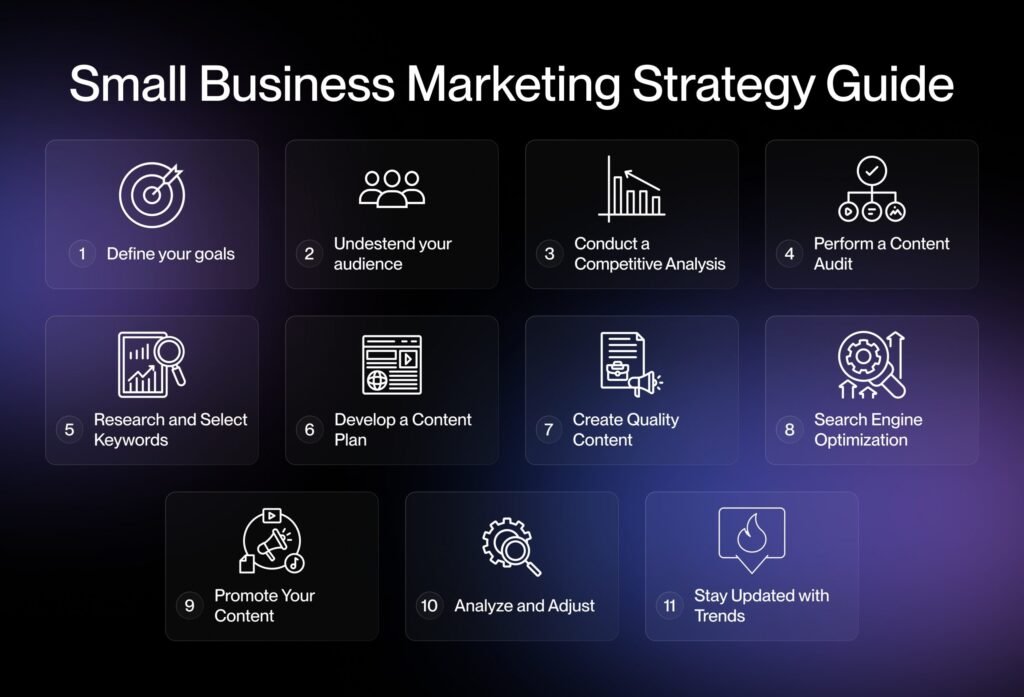
Step 1: Understand the Business Before Doing Any Marketing
Before touching social media, SEO, or ads, I would first understand:
- What problem the business solves
- Who the ideal customer is
- Why customers should choose this business over competitors
Questions I Would Ask:
- Who is your target audience?
- What is your main product or service?
- What makes your business different?
- Where do your customers currently come from?
This clarity ensures that every free marketing effort is focused, not random.
Step 2: Optimize Google Business Profile (Highest Priority)
If the business is local, Google Business Profile (GBP) is my first and most powerful free tool.
What I Would Do:
- Create or optimize the Google Business Profile
- Add correct business details (NAP consistency)
- Write a keyword-optimized business description
- Upload real photos regularly
- Post weekly updates
- Actively ask customers for reviews
📍 Why this works:
Google shows local businesses for free when people search for services nearby. One optimized profile can bring daily leads without spending a single rupee.
Step 3: Use Local SEO to Rank Without Paid Ads
Instead of running ads, I would focus on local SEO.
My Local SEO Strategy:
- Target keywords like:
- “Best [service] near me”
- “[service] in [city]”
- Create simple location-based pages
- Add the business to free local directories
- Ensure name, address, and phone number consistency
Local SEO helps small businesses outrank big brands locally—even with no budget.
Step 4: Create Helpful Content (Blogs & Short Posts)
Content marketing doesn’t require money—only consistency.
What I Would Create:
- Blog posts answering common customer questions
- How-to guides related to the service
- Problem-solution based articles
Example:
If the business is a salon:
- “How to Maintain Hair After a Hair Spa”
- “Best Hair Care Tips for Monsoon”
📈 Why this works:
Helpful content builds trust, improves SEO, and attracts customers before they’re ready to buy.
Step 5: Use Social Media Strategically (Not Random Posting)
I wouldn’t try to be everywhere. I would focus on one or two platforms only.
My Social Media Approach:
- Choose platforms where customers already are (Instagram, Facebook, LinkedIn)
- Post:
- Behind-the-scenes content
- Customer testimonials
- Before-after results
- Educational posts
- Use trending but relevant hashtags
- Engage in comments and DMs daily
💡 Consistency beats creativity.
One post per day is better than ten posts once a month.
Step 6: Leverage WhatsApp & Word-of-Mouth Marketing
WhatsApp is a free but powerful marketing channel.
What I Would Do:
- Create a professional WhatsApp Business profile
- Use broadcast lists for updates and offers
- Ask happy customers to share referrals
- Send follow-up messages after service
Word-of-mouth grows faster when it’s encouraged properly.
Step 7: Collaborate Instead of Paying Influencers
No budget doesn’t mean no partnerships.
Free Collaboration Ideas:
- Partner with complementary local businesses
- Exchange shout-outs on social media
- Co-create content or offers
- Feature each other’s services
This expands reach without spending money.
Step 8: Track Results & Double Down on What Works
Even free marketing needs tracking.
Metrics I Would Monitor:
- Website traffic
- Google Business Profile views
- Calls and messages
- Social media engagement
- Leads and conversions
Then I would double down on what’s working and eliminate what’s not.
Final Thoughts: No Budget ≠ No Marketing
Marketing without a budget is not about shortcuts—it’s about smart execution.
If I were marketing a small business with no budget, I would focus on:
- Visibility
- Trust
- Consistency
- Value
When done right, free marketing can outperform paid ads—especially for small and local businesses.